
One question, asked to the whole world
What international surveys say about wellbeing, and the people they never reach
Imagine a ladder with ten rungs.
The top rung is the best life you can picture for yourself. The bottom is the worst. Which rung are you standing on tonight?
Pollsters ask that question all over the world. Picture a mother in Guadalajara answering it. A student in Pune. A taxi driver in Ho Chi Minh City. A nurse in Houston. Each one points to a rung. Those answers become averages, the averages become a ranking, and the 2026 World Happiness Report ranks 147 countries using survey averages from 2023 to 2025.
It is one of the most hopeful things people have built: a way of listening to the whole world at once.
It is also a place where a great many people disappear. Here is what the ranking shows, and what it cannot.
What the world says
World Happiness Report 2026 (survey years 2023 to 2025), selected countries:
| Region | Country | Rank (of 147) | Score (0 to 10) |
|---|---|---|---|
| Central America | Costa Rica | 4 | 7.439 |
| North America | Mexico | 12 | 6.972 |
| North America | United States | 23 | 6.816 |
| South America | Brazil | 32 | 6.634 |
| Southeast Asia | Singapore | 36 | 6.585 |
| Central America | Guatemala | 42 | 6.533 |
| Southeast Asia | Vietnam | 45 | 6.428 |
| Southeast Asia | Thailand | 52 | 6.296 |
| South America | Colombia | 68 | 6.040 |
| Southeast Asia | Malaysia | 71 | 6.005 |
| South Asia | India | 116 | 4.536 |
Three things stand out.
The ranking can surprise you. Costa Rica ranks 4th, the highest a Latin American country has ever placed. The United States is 23rd. Mexico, at 12th, sits well ahead of Singapore at 36th.
Southeast Asia is not one story. Vietnam is 45th, Thailand 52nd, Malaysia 71st. That is a 26-place spread inside a single region, and a good reason to distrust any headline that says "Asia."
India is 116th of 147. Behind that one number are more than a billion people (World Bank, 2024).
A country's score is an average. Nobody lives in an average.
Ask a different way, and the map changes
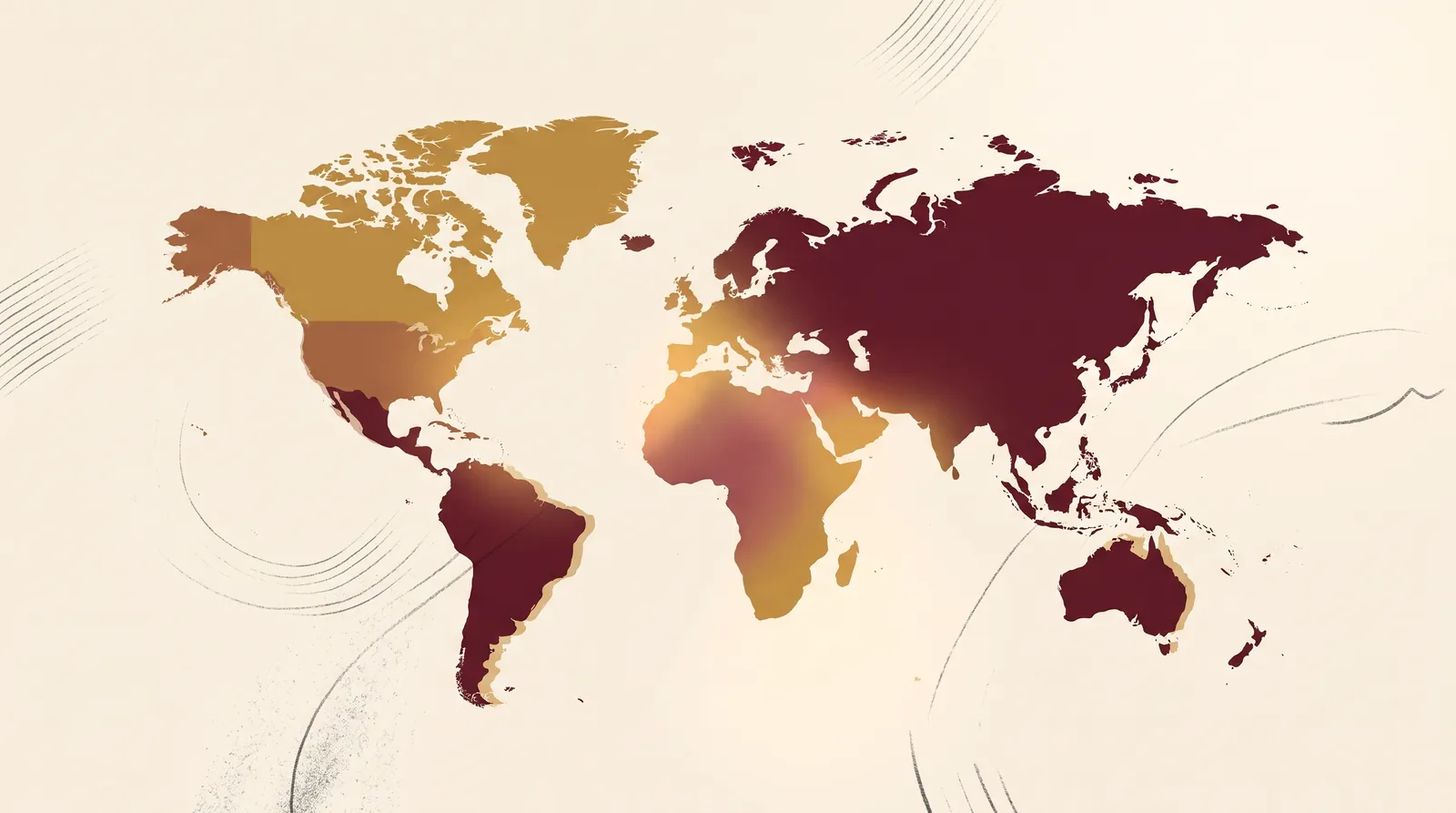
The ladder asks one thing: how good is your life overall? The Global Flourishing Study asked far more. More than 200,000 adults in 22 countries were asked about meaning, relationships, character, purpose, health.
On that broader measure, Indonesia (8.47), Mexico (8.19) and the Philippines (8.11) scored highest. Japan (5.93) scored lowest. The United States scored 7.18.
And India? 7.43. Ahead of the United States.
The two scales are different, so the numbers cannot be lined up side by side. But look at what happens to the story. A country in the bottom quarter of the ladder ranking scores above the United States when we ask about flourishing instead. The answer depends on the question.
Mexico is high on both. And the researchers noticed something that should make every wealthy country pause. Many richer nations report more financial security, yet lower meaning and weaker relationships.
Money can buy a steadier life. It does not, on its own, buy a fuller one.
Who is missing
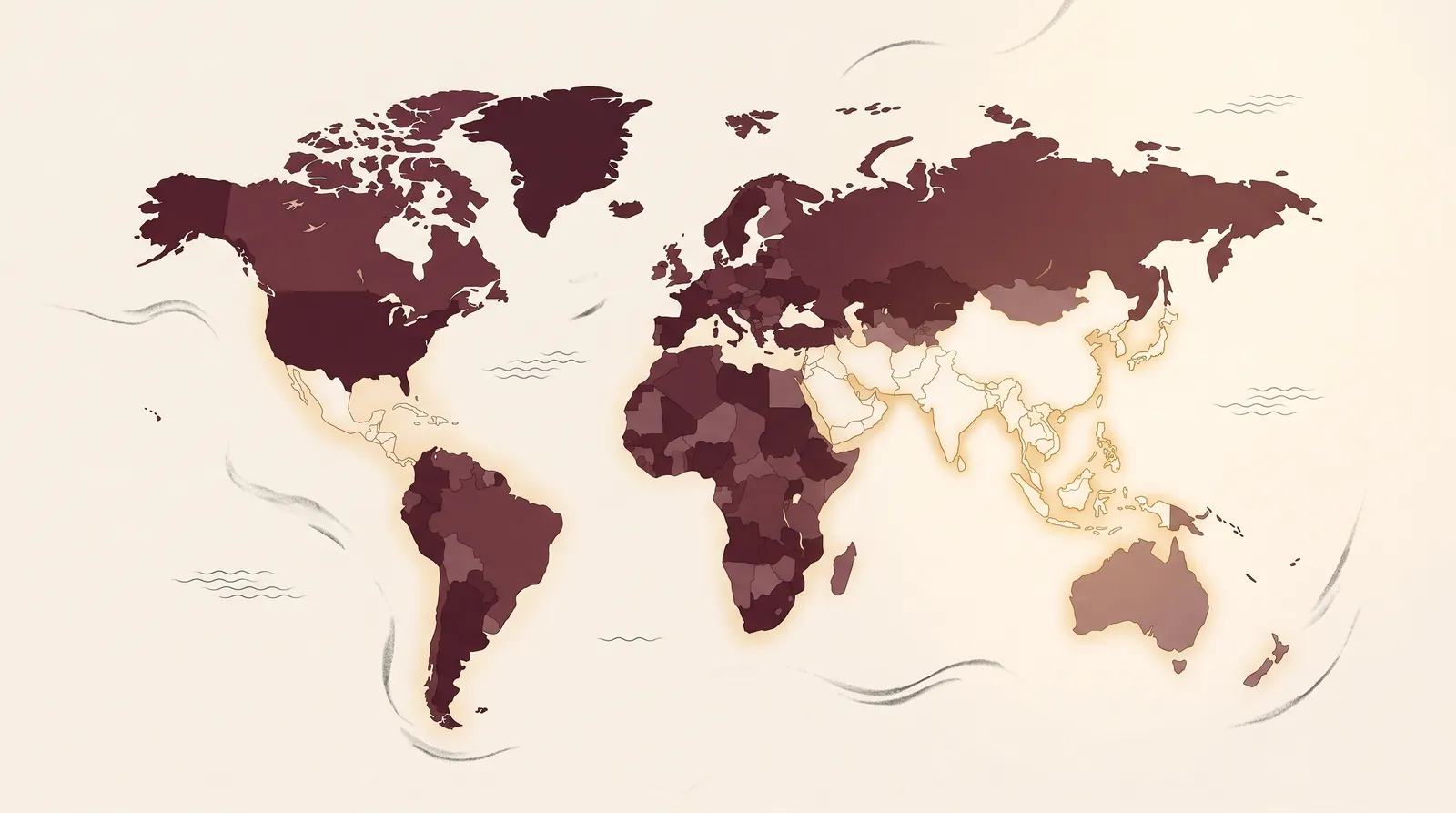
This is the part that stays with us.
The Global Flourishing Study spans 22 countries. Singapore, Thailand, Vietnam and Malaysia are not among them. Latin America is there through three countries: Argentina, Brazil and Mexico. The study includes no low-income countries at all.
Its authors are candid about the limits. People in different cultures can read the same question, and the same scale, differently.
The World Happiness Report carries a quieter warning too. In North America and Western Europe, young people are much less happy than they were fifteen years ago. An average can hold steady while a whole generation inside it struggles.
The most honest thing the surveys tell us is how much of the human story they have not yet heard.
Want to see the numbers for yourself? Our prototype Global Wellbeing Map shades every country by happiness, life expectancy and suicide rate, using open data from the World Happiness Report, the UN and the World Health Organization.
Listening is not the same as helping
A ranking can show how people rate their lives. By itself, it cannot establish which interventions improve them.
The World Health Organization's 2025 report counts more than 1 billion people living with a mental health condition. The median government puts just 2% of its health budget toward mental health. High-income countries spend up to US$65 per person. Low-income countries spend as little as US$0.04. The median country has 13 mental health workers for every 100,000 people.
Behind every one of those numbers is someone in a community hall, on a village path, in a clinic with one nurse, helping the person next to them with almost nothing.
The world we are working toward

Imagine a world where the people closest to the problem are also the ones whose answers count. Where the community program that works in Pune can be tested, shared openly, and carried to Guatemala City. Where wellbeing is measured in the places the surveys do not reach, and the measuring serves the people being measured.
That is the world the Global Wellbeing Institute is building toward, through two programs now in development. The Impact & Evaluation Lab is designed to put serious evaluation within reach of the programs closest to the problem. The Global Fellows Program is designed so that one scholarship becomes a chain of teachers, each carrying what they learn back home.
If you lead a community program, fund one, or want wellbeing counted where the surveys have not gone, we would love to hear from you. Come and build it with us.
Request our partner prospectusdirector@globalwellbeinginstitute.org
Sources
- World Happiness Report 2026, official report with country rankings and scores (147 countries; survey years 2023 to 2025): https://files.worldhappiness.report/WHR26.pdf
- World Happiness Report data and main findings: https://www.worldhappiness.report/data-sharing/ and https://worldhappiness.report/ed/2026/ (youth finding quoted from the homepage)
- World Bank, 2024 population table (India): https://datacatalogfiles.worldbank.org/ddh-published/0038126/DR0046429/POP.pdf
- Ladder wording and method: World Happiness Report FAQ, https://www.worldhappiness.report/faq/
- Global Flourishing Study, first wave results (202,898 adults, 22 countries; Flourishing Index without financial security; limitations): https://pmc.ncbi.nlm.nih.gov/articles/PMC12165845/ (Nature Mental Health, s44220-025-00423-5)
- World Health Organization, "Over a billion people living with mental health conditions" (2 Sept 2025): https://www.who.int/news/item/02-09-2025-over-a-billion-people-living-with-mental-health-conditions-services-require-urgent-scale-up
Global Wellbeing Institute is a new organization and its programs are in development. We do not report program results.