Why evaluation matters for community health programs, and how to start
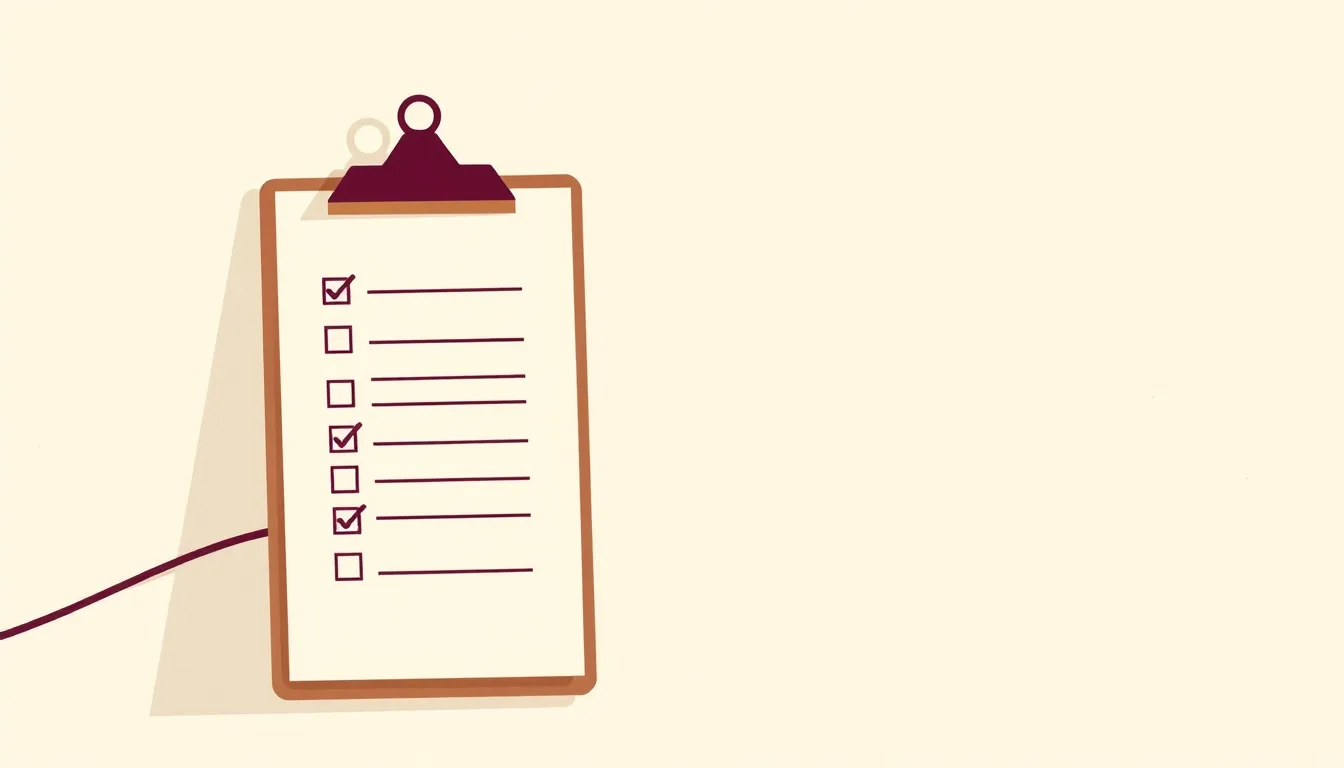
Researchers describe evaluation in this field as often weak or missing. Here is what a simple, honest evaluation can look like
Picture a community program that everyone agrees is helping. People show up. Volunteers are warm. The room feels good.
Now picture someone asking a simple question: how do we know?
That question is harder to answer than it sounds. It is one that anyone building a community health program should be ready to face, and one that funders and neighbors may ask.
What researchers say
On 2 December 2025, Simpson, Jackson, Rosenberg and Willis published a review article in Frontiers in Public Health describing a framework for measuring community-based health promotion. In their introduction, they describe evaluation in this field as "often poorly conducted or not done at all." They add that these challenges are worse in low-resource settings.
Some honest limits are worth stating. This is an attributed statement from the research literature, not a count: the paper does not estimate how many programs go unevaluated, so it supports the word "often" and nothing stronger. The framework was developed with organisations in Western Australia. The authors disclose consultative funding from the health promotion agency Healthway, which also contributed to the framework's development, and they state the funder was not involved in study design, analysis or the decision to publish.
Older numbers, with caveats
Other sources point in a similar direction, though none are specific to health, and both are historical. We share them as reported by their authors. We have not independently verified the underlying data.
Innovation Network's State of Evaluation 2016 surveyed U.S. nonprofits about their 2015 experiences. It reported that 14 percent of small organizations (annual budgets under $500,000) and 49 percent of large ones ($5 million or more) worked with an external evaluator. That measures reported use of outside evaluators, not whether an organization evaluates at all. In fact, the same report found that most responding nonprofits said they evaluated their work in some way. The survey was self-reported, had a low response rate, and underrepresented smaller organizations.
The Bridgespan Group, in an article published on 22 April 2018, reported that 80 percent of survey respondents said their organization measures its impact and performance. Of that group, 52 percent said they do so using external evaluations. The respondents were nonprofit-sector stakeholders answering for themselves, so these are self-reported figures.
Put together, the picture is not "nobody evaluates." It is that evaluation varies a great deal, and that reported use of outside evaluators differs by organizational size.
What a good evaluation framework looks like
The good news is that evaluation guidance is public and practical. The U.S. Centers for Disease Control and Prevention (CDC) publishes a Program Evaluation Framework, on a page dated 20 August 2024, which it describes as a practical, nonprescriptive tool. It organizes evaluation into six steps:
- Assess the context
- Describe the program
- Focus the evaluation questions and design
- Gather credible evidence
- Generate and support conclusions
- Act on findings
These are supported by five standards: relevance and utility, rigor, independence and objectivity, transparency, and ethics. The framework also names three cross-cutting actions: engage collaboratively; promote fair and just evaluation practices and outcomes; and learn from and use insights.
Public guidance does not mean evaluation is free. It takes time and attention. But the steps give a small organization a place to start.
A small example (GIHEW's own illustration)
The following is GIHEW's own illustration of a small evaluation exercise. It is not a CDC product, a validated protocol or a real result.
Imagine a small community workshop series. Before it starts, organizers write down what they hope will change and ask participants three short questions. After the last session, they ask the same three questions again. They also ask what was confusing or missing. Then they write down what they learned, including what did not work, and change the next series accordingly.
This illustrates some of the framework's habits: clear questions, gathering evidence, discussing limits and acting on findings. It will not prove that the workshop caused any change. It does something valuable anyway: it builds the habit of asking "how do we know?" and answering in the open.

Where GIHEW fits
GIHEW's programs are in development. As they take shape, we want evaluation planned from the start, with plain questions, honest limits and findings shared openly. We believe the people a program serves deserve to know whether it works.
Join the conversation
If you work in community health, or care about how programs earn trust, we would like to hear from you. What does evaluation look like where you are? What has made it hard? Reach out through the GIHEW website and share your experience.
Sources
| Source | Date | Publisher | Link |
|---|---|---|---|
| Simpson, Jackson, Rosenberg, Willis. Measuring delivery and impact in community-based health promotion initiatives: development and overview of the Healthway Evaluation Framework | 2 Dec 2025 | Frontiers in Public Health, vol 13:1676965 (DOI 10.3389/fpubh.2025.1676965) | https://www.frontiersin.org/journals/public-health/articles/10.3389/fpubh.2025.1676965/full |
| CDC. Program Evaluation Framework | 20 Aug 2024 (page date) | U.S. Centers for Disease Control and Prevention | https://www.cdc.gov/evaluation/php/evaluation-framework/index.html |
| Innovation Network. State of Evaluation 2016: Evaluation Practice and Capacity in the Nonprofit Sector (survey asked about 2015) | 2016 | Innovation Network | https://www.innonet.org/media/2016-State_of_Evaluation.pdf |
| Meehan and Jonker. Most Nonprofits Aren't Ready for the Coming Impact Era | 22 Apr 2018 | Bridgespan Group | https://www.bridgespan.org/insights/most-nonprofits-not-ready-for-impact-era |
Global Wellbeing Institute is a new organization and its programs are in development. We do not report program results.